

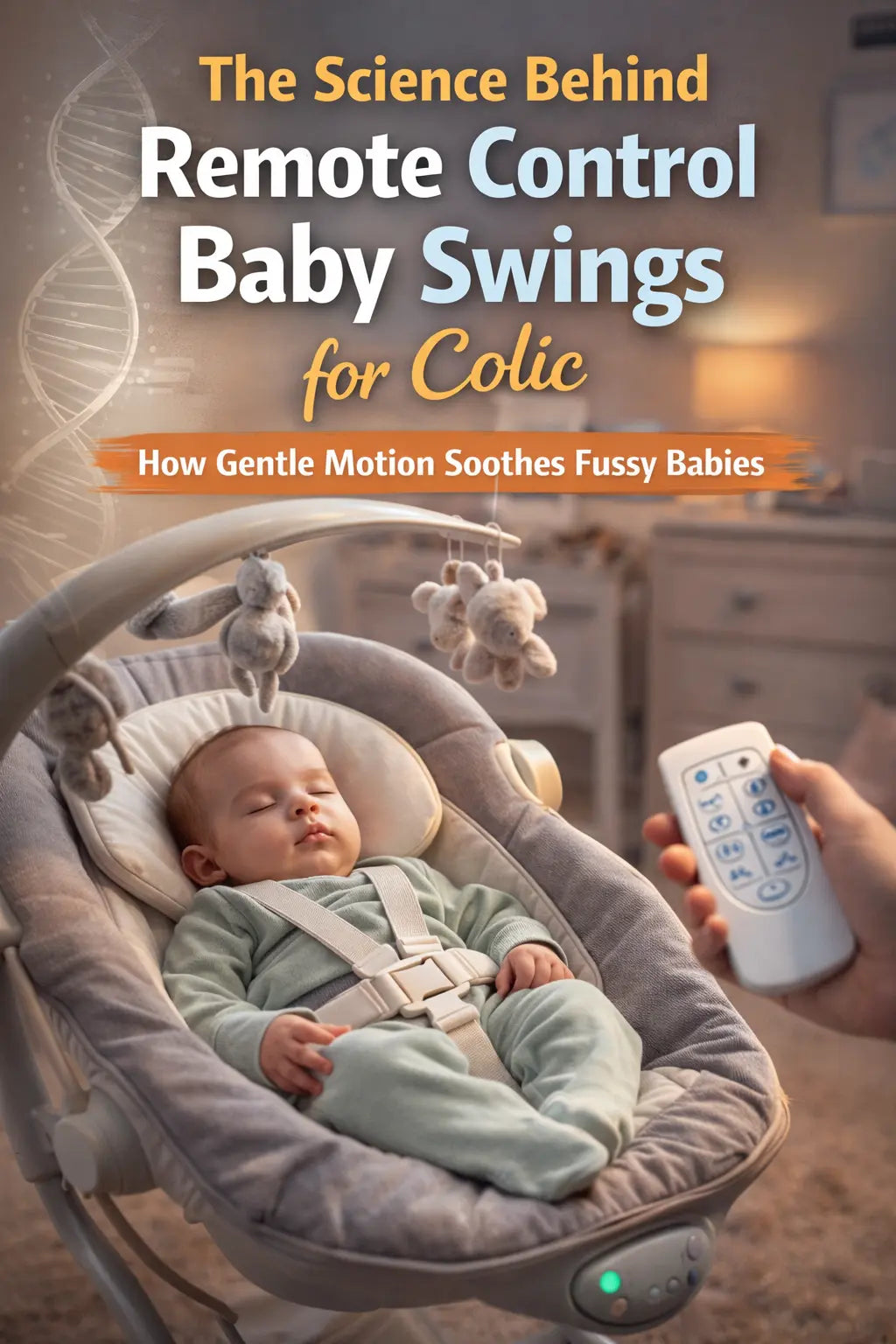
Colic has a way of turning peaceful evenings into endurance tests. One minute your baby is fed, dry, and cuddled. The next minute, they are crying with a determination that feels bigger than their tiny body. If you’ve paced your living room at 2:17 a.m., whispering negotiations to a human who cannot yet hold up their own head, you understand the search for relief.
Among the many tools parents try, one has quietly become a modern ally: the remote control baby swing. At first glance, it looks like convenience wrapped in soft fabric. But beneath the gentle motion and calming music lies something deeper. There is real science behind why rhythmic movement can help soothe babies struggling with colic.
Let’s explore what’s happening inside your baby’s body, and why that steady sway can feel almost magical.
Understanding Colic: What’s Really Going On?
Colic is typically defined as frequent, intense crying in an otherwise healthy baby, often lasting for hours and appearing without a clear cause. It usually begins within the first few weeks of life and peaks around six weeks before gradually improving.
Doctors still debate the exact cause, but research points toward several factors:
-
An immature digestive system
-
Sensitivity to stimulation
-
Gas discomfort
-
Developing nervous system regulation
What’s important to understand is this: colic is not a parenting failure. It is often a developmental phase, one that challenges both baby and caregiver.
Why Motion Calms Babies
The Womb Was Never Still
Before birth, your baby lived in a constantly moving environment. Every step you took, every time you shifted in a chair, even your breathing created subtle motion. Your baby was gently rocked for months before ever seeing daylight.
When babies are born, that movement suddenly stops. The world becomes bright, loud, and strangely still. Reintroducing rhythmic motion can feel familiar and reassuring.
The Vestibular System at Work
Inside your baby’s inner ear is the vestibular system, responsible for balance and spatial awareness. This system develops early and is highly sensitive to motion. Gentle swinging stimulates this system in a calming way, helping regulate the nervous system.
When the vestibular system receives predictable, rhythmic input, it can reduce stress signals in the brain. That steady sway is not random. It speaks a language your baby’s body already understands.
The Nervous System and Colic
Colic is often linked to an immature nervous system that struggles to self-soothe. Babies are still learning how to regulate their responses to hunger, discomfort, light, sound, and internal sensations.
Gentle motion activates the parasympathetic nervous system, sometimes called the “rest and digest” mode. This is the opposite of the stress response. When activated, heart rate slows, breathing steadies, and muscles relax.
A remote control baby swing provides consistent movement without abrupt changes. That consistency matters. Babies thrive on predictability.
The Role of Rhythm in Soothing
Humans are wired for rhythm. Think about how easily adults relax to ocean waves, rain sounds, or rocking in a hammock. Babies respond even more strongly.
Rhythmic swinging mimics patterns they experienced in utero. Combined with white noise or soft music, it creates a sensory environment that can reduce overstimulation, which is often a trigger for colic episodes.
How Remote Control Technology Enhances the Experience
Traditional baby swings required manual pushing. That works for a while, but tired arms eventually give up. A remote control baby swing allows parents to adjust speed, motion pattern, and music without interrupting the baby’s comfort.
That matters more than you might think.
When a baby finally settles, even a small disturbance can restart the crying cycle. Being able to change settings quietly preserves the calming rhythm.
The Digestive Connection
Motion and Gas Relief
One theory behind colic involves trapped gas. Gentle movement can help stimulate the digestive tract, encouraging gas to move along more comfortably.
While a swing is not a medical treatment, the soft rocking can sometimes reduce abdominal tension, especially when combined with proper feeding techniques and burping.
Relaxation Reduces Physical Tension
When babies cry intensely, their abdominal muscles tighten. This tension can worsen discomfort. Rhythmic motion encourages relaxation, which may indirectly ease digestive distress.
Parental Stress and Baby Stress
Babies are surprisingly perceptive. They sense changes in tone, posture, and energy. When parents are exhausted and anxious, babies can become more unsettled.
A remote control baby swing does not replace human comfort. But it gives parents short moments to breathe, regroup, or simply rest their arms. A calmer parent often leads to a calmer baby.
There is science behind this too. Lower parental stress can reduce environmental stress cues that babies unconsciously absorb.
The Importance of Controlled Stimulation
Overstimulation can contribute to colic-like behavior. Bright lights, loud environments, and constant handling may overwhelm a newborn’s developing brain.
A remote control baby swing often includes adjustable features. You can lower motion speed, turn off music, or choose subtle vibration settings. This level of control allows parents to create a balanced sensory experience rather than adding more chaos.
Sleep and Colic Relief
Sleep deprivation worsens colic episodes. An overtired baby has a harder time calming down, creating a cycle of crying and fatigue.
Gentle swinging can help transition babies into light sleep. The rhythmic motion reduces the startle reflex, also known as the Moro reflex, which can wake babies abruptly.
When babies rest better, colic symptoms may feel less intense.
Safety Considerations and Responsible Use
It’s important to remember that swings are not substitutes for safe sleep practices. Babies should not sleep unattended in a swing for extended periods, and always follow manufacturer guidelines.
The goal is support, not dependence.
Just as parents carefully research silicone teething beads safety before giving a baby something to chew, it is equally important to evaluate swing safety features. Thoughtful parenting means looking at materials, stability, harness design, and motor reliability. The same mindset that drives conversations about silicone teething beads safety reflects a broader desire to protect babies from avoidable risks.
When we think carefully about silicone teething beads safety, we are really practicing risk awareness. We want reassurance that what surrounds our baby is safe and well designed. A remote control baby swing deserves the same scrutiny. Secure harness systems, smooth motion mechanisms, and stable bases are essential.
The Psychology of Repetition
Babies find comfort in repetition. Repeated motion builds familiarity, and familiarity reduces stress. It is why lullabies are sung the same way each night and why bedtime routines matter.
A remote control baby swing provides consistent repetition. Unlike manual rocking, which may vary as parents tire, motorized swings maintain steady pacing. That predictable rhythm can be deeply soothing for a baby whose internal world feels chaotic.
When Swings May Not Help
Not every colicky baby responds to motion. Some may prefer upright holding, skin-to-skin contact, or gentle walking. Others may have underlying medical issues such as reflux that require professional guidance.
A swing is a tool, not a cure. Understanding your baby’s unique temperament remains essential.
Combining Strategies for Best Results
Parents often find success when combining multiple soothing techniques. These may include:
-
Swaddling
-
White noise
-
Gentle rocking
-
Upright holding after feeds
A remote control baby swing can become one piece of this larger calming toolkit.
The Emotional Relief for Parents
Colic can create feelings of helplessness. Watching your baby cry intensely without a clear solution is emotionally draining. When something as simple as gentle motion brings even a few minutes of peace, it feels monumental.
Those small breaks matter. They preserve patience. They protect mental health. They make it easier to show up with warmth instead of frustration.
The Evolving Science of Infant Soothing
Researchers continue studying infant regulation, sensory processing, and early development. While no device replaces responsive caregiving, motion-based soothing has strong developmental roots.
The combination of vestibular stimulation, rhythmic consistency, and parental relief explains why swings have remained popular for generations. The addition of remote control technology simply refines the experience.
Final Thoughts
Colic can make early parenthood feel overwhelming. But understanding the science behind soothing tools can restore a sense of control.
A remote control baby swing works because it taps into something ancient and biological. It recreates familiar motion, regulates the nervous system, encourages relaxation, and offers parents a much-needed pause.
It is not magic. It is rhythm meeting biology.
And sometimes, in the quiet hum of a gently swaying seat, that rhythm is enough to turn a stormy evening into something softer.


