

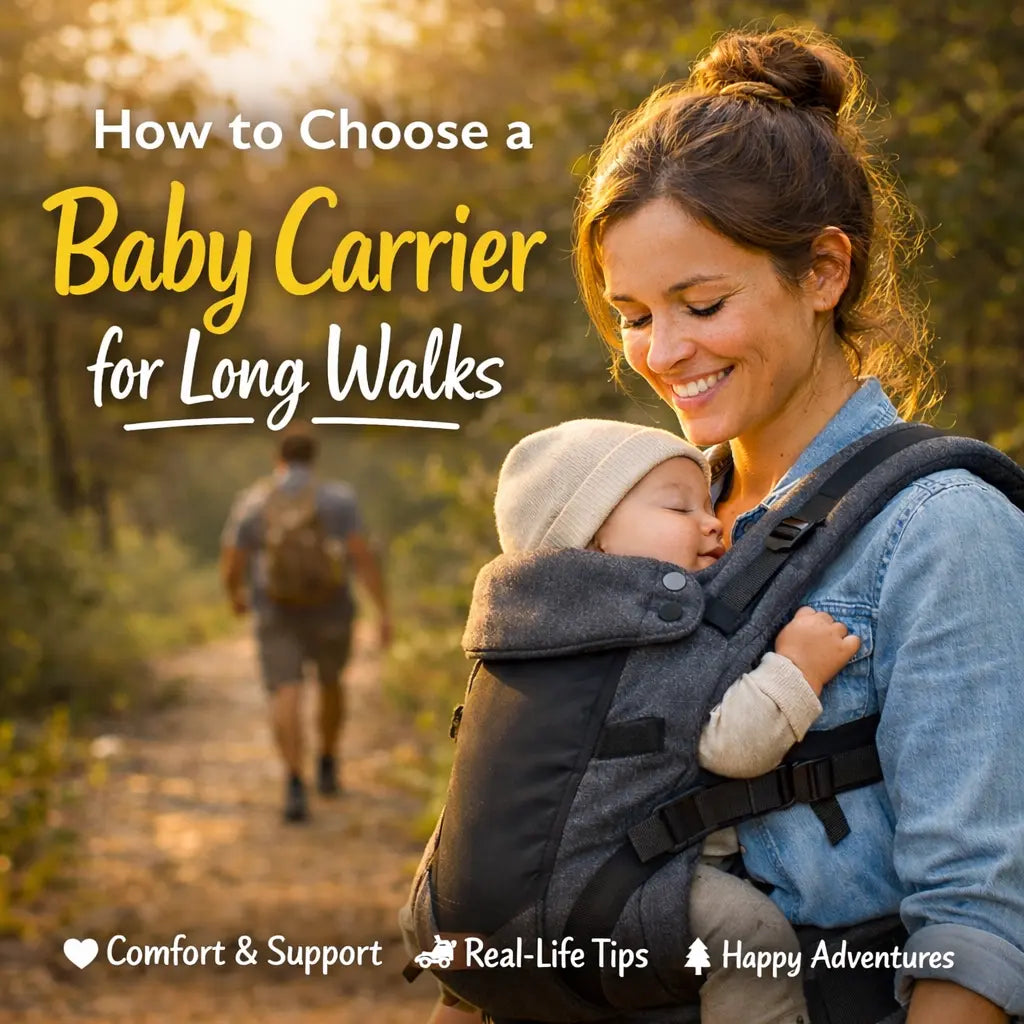
I still remember my first “long walk” with a baby carrier. What I thought would be a peaceful thirty-minute stroll turned into sore shoulders, a sweaty baby, and me silently negotiating with my own back to survive till home. That walk taught me something important very quickly: not all baby carriers are made for long walks.
If you are planning regular walks, whether it’s evening strolls, travel days, or just clearing your head while your baby naps, learning how to choose a baby carrier for long walks makes a world of difference. This is not about brand hype or fancy features. It is about comfort, balance, and making sure you enjoy the walk instead of counting every step.
Long Walks Change Everything
A carrier that feels fine for ten minutes can feel completely wrong after forty. During long walks, every small design flaw shows up. Thin straps start biting into your shoulders. Poor weight distribution pulls your upper body forward. Your baby, who was calm at first, starts shifting and fussing.
Long walks demand consistency. Your body needs steady support, and your baby needs a position they can stay in comfortably without constant adjustment. Once you experience a truly supportive carrier, you immediately understand why choosing the right one matters so much.
Comfort Is Not Just Soft Padding
I used to think comfort meant thick padding. The more padded the carrier looked, the better it must be. Experience taught me otherwise. Some overly padded carriers trap heat, feel bulky, and somehow still leave pressure points.
Real comfort comes from balance. A good carrier spreads your baby’s weight evenly across your body instead of letting it hang from your shoulders. The waistband plays a bigger role than most people realize. When it sits properly on your hips, it takes a surprising amount of load off your back.
If you are figuring out how to choose a baby carrier for long walks, pay attention to how the carrier supports you, not just how soft it looks.
Your Baby’s Position Matters More Than You Think
During long walks, babies often fall asleep. When they do, their body relaxes completely. This is when proper positioning becomes essential. A well-designed carrier supports your baby in a natural seated posture, with knees slightly higher than the bottom and the spine gently curved.
I learned this the hard way when my baby kept waking up uncomfortable in one carrier but slept peacefully in another. The difference was posture. When your baby’s body is well-supported, they relax more deeply, which makes the walk calmer for both of you.
Understanding how to choose a baby carrier for long walks means choosing one that supports healthy posture, especially during naps.
Breathability Saves Walks
There is nothing romantic about realizing halfway through a walk that both you and your baby are overheating. Body heat builds quickly during long walks, even in mild weather. Breathable fabric is not a luxury, it is a necessity.
Carriers with airflow panels or lightweight, breathable materials keep things manageable. You still get warmth and closeness, but without that trapped, sticky feeling. This becomes even more important if you live in a warm climate or plan to walk during the day.
From experience, a breathable carrier turns a long walk from exhausting to enjoyable.
Adjustability Is a Lifesaver
Babies grow fast. One month your carrier fits perfectly, the next it feels awkward. Adjustable carriers adapt with your baby and save you from buying a new one every few months.
Adjustability also matters if more than one person uses the carrier. A carrier that can be quickly adjusted without a struggle encourages more frequent use. When it is easy to put on and comfortable for everyone, you naturally use it more.
If you are serious about learning how to choose a baby carrier for long walks, look for one that grows with your baby and adapts easily to different body types.
Front Carry or Back Carry for Long Walks
Front carrying feels natural in the early months. You can see your baby, feel their breathing, and respond quickly. For long walks with a lighter baby, this can be incredibly comforting.
As babies get heavier, back carrying becomes a game changer. It shifts weight more evenly and allows you to walk longer with less fatigue. The first time I switched to back carry for a long walk, the difference was immediate. My posture improved, my shoulders relaxed, and I could actually enjoy the scenery again.
Knowing how to choose a baby carrier for long walks also means knowing when to switch carrying positions as your baby grows.
Ease of Use Makes or Breaks the Experience
No one enjoys wrestling with straps while standing outside. A complicated carrier might look impressive, but if it takes too long to put on or adjust, it becomes frustrating quickly.
The best carriers are intuitive. You should be able to put them on confidently, adjust them mid-walk if needed, and take them off without stress. When the carrier feels like second nature, your walks feel smoother and more relaxed.
Practical ease is an underrated part of how to choose a baby carrier for long walks.
Head and Neck Support During Naps
Long walks almost always lead to naps. A good carrier supports your baby’s head gently without forcing it into an awkward position. Adjustable head panels or soft structured support help keep your baby comfortable while sleeping.
There is a special peace in walking while your baby sleeps soundly against you. Proper head and neck support makes that possible without constant checking or adjusting.
Your Body Will Tell You the Truth
One of the most honest tests of a carrier is how your body feels afterward. If you feel strain in your lower back, neck, or shoulders after a walk, something is off. A well-fitted carrier should leave you pleasantly tired, not sore.
Good carriers encourage upright posture. They do not pull you forward or force you to compensate with your muscles. Listening to your body is one of the most reliable ways to understand how to choose a baby carrier for long walks.
Safety and Build Quality Matter Long-Term
Long walks mean repeated use. Over time, weak stitching, flimsy buckles, or cheap fabric show their flaws. A well-made carrier feels secure every time you put it on.
Quality construction gives peace of mind. You want to focus on your walk, not on whether a strap might loosen or a buckle might fail. Investing in a reliable carrier is not about luxury, it is about confidence.
The Emotional Side of Long Walks
Some of my best moments with my baby happened during long walks. Quiet streets, soft breathing, and that feeling of closeness that only a carrier provides. A good carrier fades into the background and lets the connection take center stage.
When you choose the right carrier, walking becomes more than exercise. It becomes bonding time. That emotional comfort is just as important as physical support when learning how to choose a baby carrier for long walks.
Try, Adjust, and Trust Your Experience
If possible, try a carrier before committing. Even a short test walk can tell you more than any product description. Pay attention to how it feels after twenty or thirty minutes.
No guide can replace personal experience. Your comfort, your baby’s comfort, and your walking style all matter. The right carrier is the one that feels natural to you.
Final Thoughts
Choosing a baby carrier for long walks is not about finding the most popular option. It is about finding the one that supports your body, keeps your baby comfortable, and fits naturally into your routine.
Once you understand how to choose a baby carrier for long walks, walking with your baby stops feeling like a task and starts feeling like shared time. And those walks, quiet and unhurried, often become some of the moments you remember most.


