

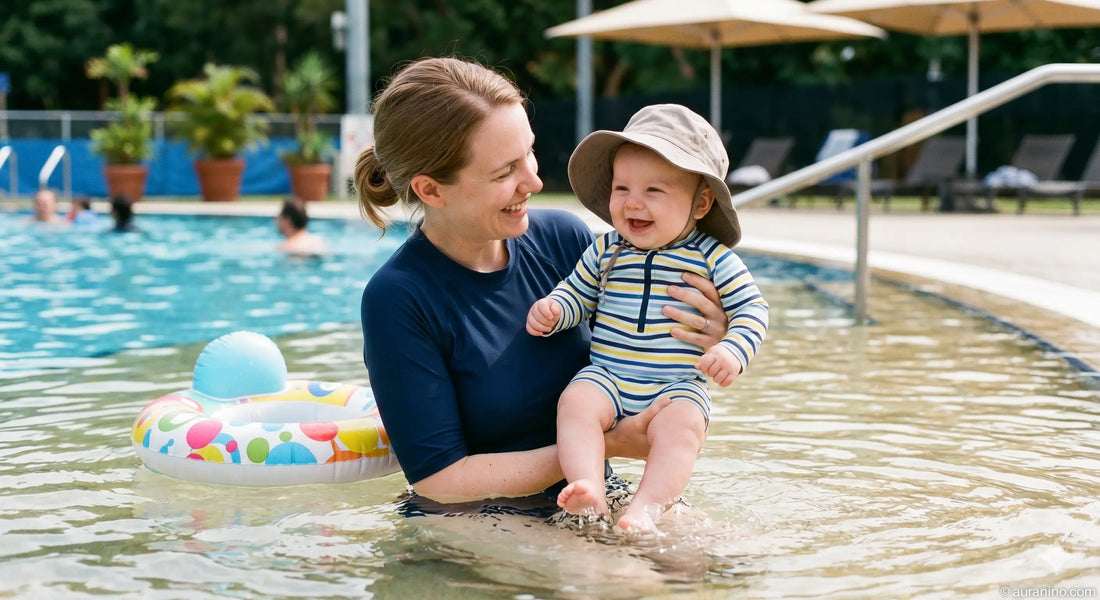
There's a particular look babies give you the moment their toes hit the water for the first time. A pause. A little gasp. And then — depending entirely on the baby — either a delighted squeal or a face that says what exactly have you done to me. Either way, it's a moment you'll remember.
A first pool day is a sweet milestone, but it comes with more small questions than most parents expect. How warm should the water be? How long is too long? What about the sun, the swim diaper situation, the floaties everyone has opinions about? Here's the honest, practical rundown — the stuff worth knowing before you pack the bag.
First, is your baby ready?
Most pediatricians suggest waiting until around the six-month mark before bringing a baby into a pool. It's not a hard rule so much as a sensible one. Younger babies can't regulate their body temperature well, and their immune systems are still getting up to speed. By six months, most little ones are sturdy enough to enjoy a gentle dip without it being a strain.
That said, "ready" looks different for every family. If your baby was premature or has any health concerns, a quick word with your pediatrician before the first swim is never a bad idea. You know your child best.
The water temperature thing matters more than you'd think
This is the one most new parents underestimate. Babies lose body heat far faster than adults — that big head, all that surface area — so a pool that feels "fine, maybe a touch cool" to you can leave a baby shivering within minutes.
Aim for water that's genuinely warm, somewhere around 88–92°F (31–33°C) for the youngest swimmers. A heated pool or a sun-warmed kiddie pool in the afternoon is ideal. If you dip your elbow in and it feels pleasantly bath-like, you're in good shape. If you feel yourself bracing, it's too cold for them.
Keep the first session short — really short
Ten to fifteen minutes is plenty for a first go. I know it's tempting to stretch it out when they're having fun, but watch closely for the early signs of a chilled baby: shivering, a slightly blue tint to the lips or fingertips, or a sudden shift from happy to fussy for no obvious reason. The second you see any of that, it's time to get out, wrap them up, and warm them back up.
Have a soft, dry towel waiting before you get in — ideally a hooded one — so the transition from water to warm is quick. A cold, dripping baby is an unhappy baby, and it sours the whole experience fast.
Sun safety isn't optional
For babies under six months, shade is your best friend. Their skin is far too delicate for much direct sun, and sunscreen isn't recommended for the littlest ones except in tiny amounts on small exposed areas when shade truly isn't available. A pool umbrella, a tree, a canopy — find the shade and stay in it during peak hours (roughly 10 a.m. to 4 p.m.).
A wide-brimmed hat and a UV-protective swimsuit do a lot of the heavy lifting here. For older babies, a baby-safe mineral sunscreen on exposed skin, reapplied after the water, rounds it out.
The swim diaper reality
Regular diapers and pools do not mix — a normal diaper swells into a soggy, waterlogged mess the instant it goes under, and it won't hold what it's supposed to hold anyway. You need an actual swim diaper, which is designed to contain the solids without ballooning. Many pools genuinely require them, so it's worth sorting out before you arrive. Pack a spare or two; you'll be glad you did.
A word on floaties and safety
Inflatable floats and seats can make a first pool visit calmer and more comfortable — a supportive baby float lets your little one bob happily while you hold them close, and it takes some of the strain off your arms during those first wobbly minutes. A good infant swim float with a built-in seat keeps baby upright and secure so the experience feels playful rather than overwhelming.
But — and this is the part that matters most — no float is a safety device. Not ever. Babies need hands-on, arm's-length supervision in the water at all times, every single second, no exceptions and no phone-checking. The phrase swim instructors use is "touch supervision": you should always be close enough to reach out and touch your baby. Floats are for comfort and fun. You are the safety system.
Timing is everything
Pick your moment. A baby who's overtired or hungry will not be charmed by the novelty of water — they'll just be overtired and hungry, now also wet. Aim for a window when they're well-rested and recently fed (though not immediately after a big feed). A mid-morning or late-afternoon swim, after a nap and a snack, tends to land best.
And bring something to feed them with afterward. Swimming is genuinely tiring for babies, and many come out hungrier and sleepier than they went in — which, honestly, can work very nicely in your favor at naptime.
Most of all, follow their lead
Some babies take to water like they were born for it. Others need a few visits before they decide it's not a betrayal. Both are completely normal. If your baby isn't into it the first time, don't force the issue — get out, try again another day, and keep it light. The goal of a first pool day isn't swimming. It's a happy, gentle introduction to something that, with any luck, becomes a lifelong love.
Pack the bag, lower your expectations for actual swimming, and enjoy the little gasp when those toes hit the water. That part's the whole point.


