

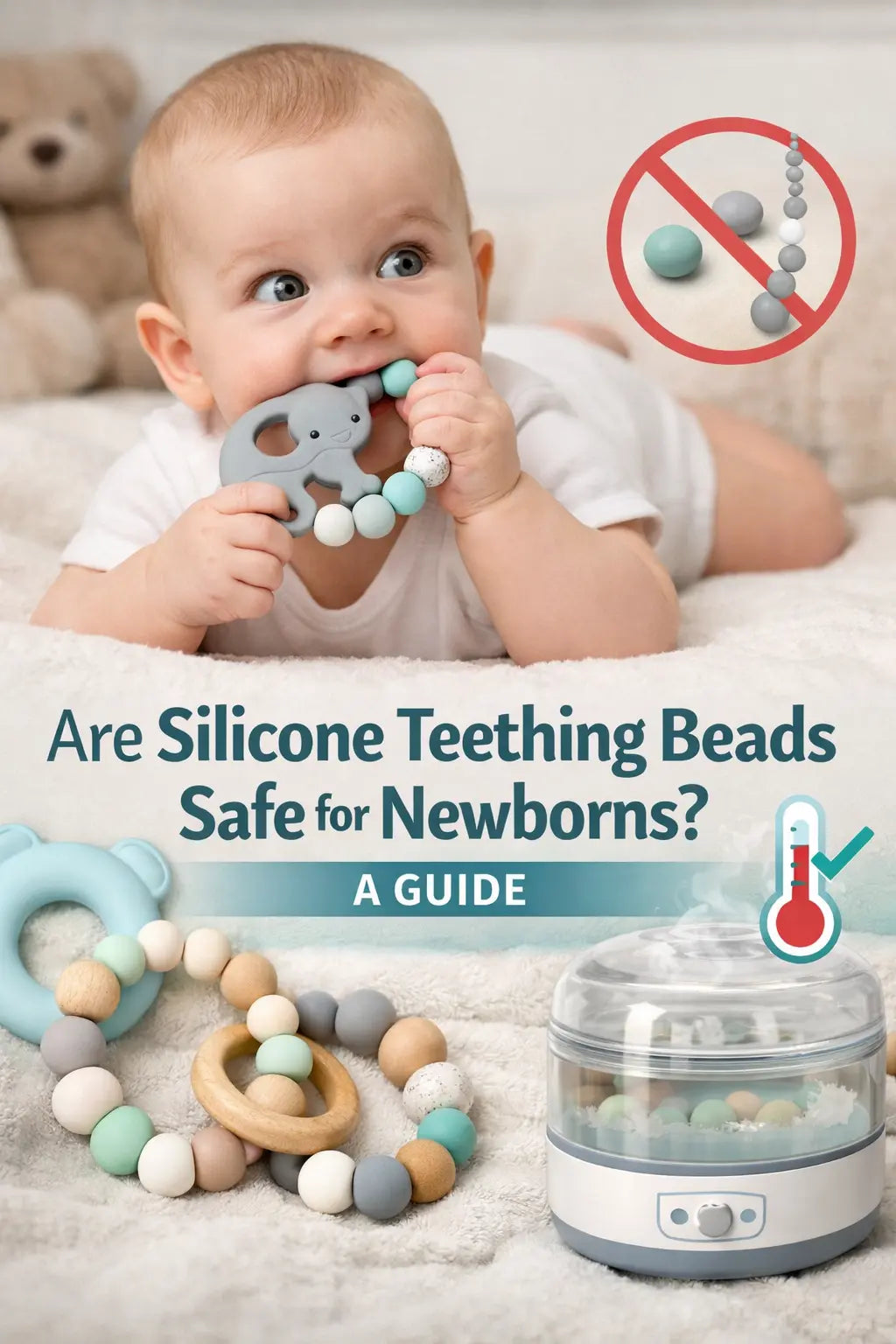
Tiny humans explore the world the same way curious scientists do, except their laboratory is the living room floor and every experiment goes straight into the mouth. Teething time turns babies into determined little gum detectives, chewing on fingers, sleeves, toys, and occasionally your shoulder. This is where silicone teething beads often enter the picture, colorful, soft, and oddly satisfying to squish. But the big question quietly tapping every parent on the shoulder is about silicone teething beads safety, especially for newborns.
Let us walk through this together in a calm, practical way, like two parents chatting over chai while a baby gnaws on a spoon nearby.
Understanding Teething in Newborns
Teething usually begins around six months, but the urge to chew can start much earlier. Even newborns who do not yet have teeth may seek pressure on their gums. Their mouths are their primary sensory tool, a built in scanner that helps them understand texture, temperature, and shape. Chewing also soothes discomfort as teeth begin their slow underground journey toward the surface.
Because babies this young have limited control over their movements and no understanding of danger, anything given to them must pass the highest level of safety common sense. This is why the discussion around silicone teething beads safety is not just useful, it is essential.
What Are Silicone Teething Beads Made Of
Silicone teething beads are usually made from food grade silicone. This material comes from silica, which is derived from sand, and is processed into a flexible, rubbery substance. It sounds almost magical, sand transformed into something soft enough for baby gums. Food grade silicone is designed to be non toxic, odorless, and free from harmful chemicals like BPA, PVC, phthalates, and lead when manufactured properly.
Unlike plastic, high quality silicone does not easily break down, leach chemicals, or develop a strong smell over time. It handles heat well and can usually be sterilized, which makes it attractive for baby products. From a material perspective, this is why many experts consider silicone one of the safer options for teething items.
Still, material safety is only one piece of the puzzle.
Why Parents Choose Silicone Teething Beads
Parents often prefer silicone beads because they are soft yet firm enough to provide gum pressure. They can be shaped into different forms, rings, necklaces for parents to wear, or bead strands attached to clips. Their smooth surface is gentle on sore gums and easy to clean. Compared to wooden or fabric teethers, silicone does not absorb drool, which helps reduce bacterial growth.
There is also a practical side. Babies drop things with impressive dedication. Silicone survives this daily gravity test better than many other materials. But while these advantages are real, silicone teething beads safety depends heavily on design, supervision, and age suitability.
Are Silicone Teething Beads Safe for Newborns Specifically
Here is where we need to slow down. Newborns, meaning babies under about three months, have very different needs and abilities compared to older infants. Their neck control is weak, their grip is unpredictable, and their gag reflex is still developing. Because of this, most pediatric safety guidelines are cautious about giving small objects or items with multiple parts to newborns.
Even if the silicone itself is safe, beads by nature are small, individual units. If a strand breaks or a bead detaches, it becomes a choking hazard. For a newborn who cannot sit up, roll reliably, or spit things out effectively, this risk matters more than the material benefits.
So when discussing silicone teething beads safety for newborns, the answer is not a simple yes or no. The silicone may be safe, but many bead based designs are not ideal for this very young age group.
The Biggest Risk, Choking and Strangulation
Choking is the main concern. Babies explore with their mouths, and anything small enough can become lodged in the airway. Beads, especially if they are loose or on a string that can snap, fall into the high alert category.
There is also a strangulation risk if beads are used as necklaces, either worn by the baby or placed within reach. Even if marketed as teething jewelry, these items are generally meant for the parent to wear, not the baby. A newborn should never have a necklace, bead strand, or clip around the neck, in the crib, or during sleep.
When thinking about silicone teething beads safety, it is important to separate the material from the format. A solid, one piece silicone teether is very different from a string of beads.
Quality Matters More Than Trends
Not all silicone is equal. Food grade silicone from a reputable manufacturer is very different from low quality silicone that may contain fillers or contaminants. Unfortunately, baby products sold online or in unregulated markets do not always meet strict safety standards.
High quality silicone teething products should be labeled BPA free, PVC free, phthalate free, and lead free. They should also comply with recognized safety standards for children’s products. Poorly made beads can crack, tear, or release small pieces, turning a soothing tool into a hidden hazard.
For parents concerned about silicone teething beads safety, checking the brand’s transparency, certifications, and product testing information is just as important as the product itself.
Design Features That Improve Safety
Some silicone teething bead products are designed with safety in mind. Beads may be too large to fit fully into a baby’s mouth, cords may be thick and durable, and knots may be placed between beads to prevent multiple beads from coming loose if the string breaks. Secure clasps that release under pressure can also reduce risk.
Even with these features, such items are usually more appropriate for older babies who have better motor control and are always supervised. For newborns, one piece silicone teethers without detachable parts are generally a safer direction.
In the conversation about silicone teething beads safety, design often matters more than the color, shape, or style.
Hygiene and Cleaning Considerations
Babies treat teethers like full time chew toys, which means they are constantly covered in saliva, milk residue, and whatever invisible adventures the floor has to offer. Silicone has an advantage here because it is non porous. Bacteria are less likely to soak in compared to fabric.
Most silicone teethers can be washed with warm soapy water and some can be sterilized by boiling or using a steam sterilizer, depending on manufacturer instructions. Regular cleaning is essential. A dirty teether, no matter how safe the material, is not safe in practice.
Cleanliness is an often overlooked part of silicone teething beads safety, but it plays a major role in preventing infections and stomach upsets.
When Can Babies Use Bead Style Teethers More Safely
As babies grow, their risk profile changes. Around six months, many infants can sit with support, bring objects to their mouth with more control, and spit out or cough up items more effectively. At this stage, with close supervision, some bead style silicone teethers may be more appropriate.
Still, they should never be used during sleep, in the crib, or when the baby is unattended. Supervision means an adult is actively watching, not just in the same room scrolling on a phone.
The phrase silicone teething beads safety should always come with another word attached, supervision.
Alternatives That May Be Better for Newborns
For very young babies, simpler is often safer. One piece silicone teethers shaped like rings, animals, or textured pads are less likely to break into small parts. Chilled, not frozen, silicone teethers can also provide extra relief for sore gums.
A clean finger gently massaging the gums or a cool, damp washcloth can be surprisingly effective. These options may look less trendy on social media, but they often fit newborn safety needs better.
Choosing the safest option is not about style. It is about matching the product to the baby’s developmental stage.
Signs a Teething Product Is Not Safe
If a silicone bead product shows cracks, tears, loose beads, or stretched string, it should be removed immediately. If the baby can fit the entire bead into their mouth, that is a red flag. If there is any strong chemical smell, discoloration, or sticky texture developing over time, it is safer to discard it.
Trust your instincts. Parents often notice small changes before they become big problems. Silicone teething beads safety includes regular inspection, not just the initial purchase.
The Role of Parental Supervision
No teething product is a substitute for supervision. Even the safest design can become risky in the wrong situation. Babies move suddenly, roll unexpectedly, and experiment constantly. Active supervision allows you to react quickly if something goes wrong.
Think of teethers as tools, not babysitters. They help soothe discomfort, but they do not remove the need for watchful care.
Final Thoughts
Silicone as a material is generally considered safe, durable, and suitable for baby teething products when it is high quality and properly manufactured. However, when we focus specifically on silicone teething beads safety for newborns, the picture becomes more cautious. The beads themselves introduce choking and strangulation risks that are more significant for very young babies with limited motor control.
For newborns, solid, one piece silicone teethers used under close supervision are usually a safer choice than bead based designs. As babies grow older and more coordinated, certain bead style products may be used more safely, but always with careful monitoring and regular inspection.
Parenting often feels like walking a tightrope made of love and worry. Asking these questions, reading labels, and choosing thoughtfully are all signs you are doing a careful, caring job. Your baby does not need the fanciest teether, just a safe one and a parent who keeps watch while those tiny gums go on their chewing adventures.


